

QUEEN’S NECKLACE: THE TIMELESS CHARM OF PUNJABI RANI HAAR
etBri Team

Picture a bride dressed in a beautifully embroidered lehenga, her face beaming with happiness and excitement as she walks down the aisle. She confidently advances, capturing everyone's gaze with the stunning Rani Haar necklace. Encrusted with vivid jewels and exquisite designs, the central pendant softly cascades with each layer of pearls or gemstones, adding to her ethereal beauty. The Rani Haar was born in imperial Indian courts, where jewelry serves as a symbol of pecking order, stroke of luck, and individuality, as well as an ornament. During the Mughal Empire, jewelry manufacturing reached its zenith, and the Rani Haar emerged to represent queenly grace. Embracing both grandeur and precise craftsmanship, a distinct style was born from the fusion of indigenous Punjabi motifs with Mughal influence. During this period, a legacy emerged, establishing the foundation for today's reverence and awe. Gold and silver, the primary materials of Rani Haars, provide the necklace with a rich and durable base.
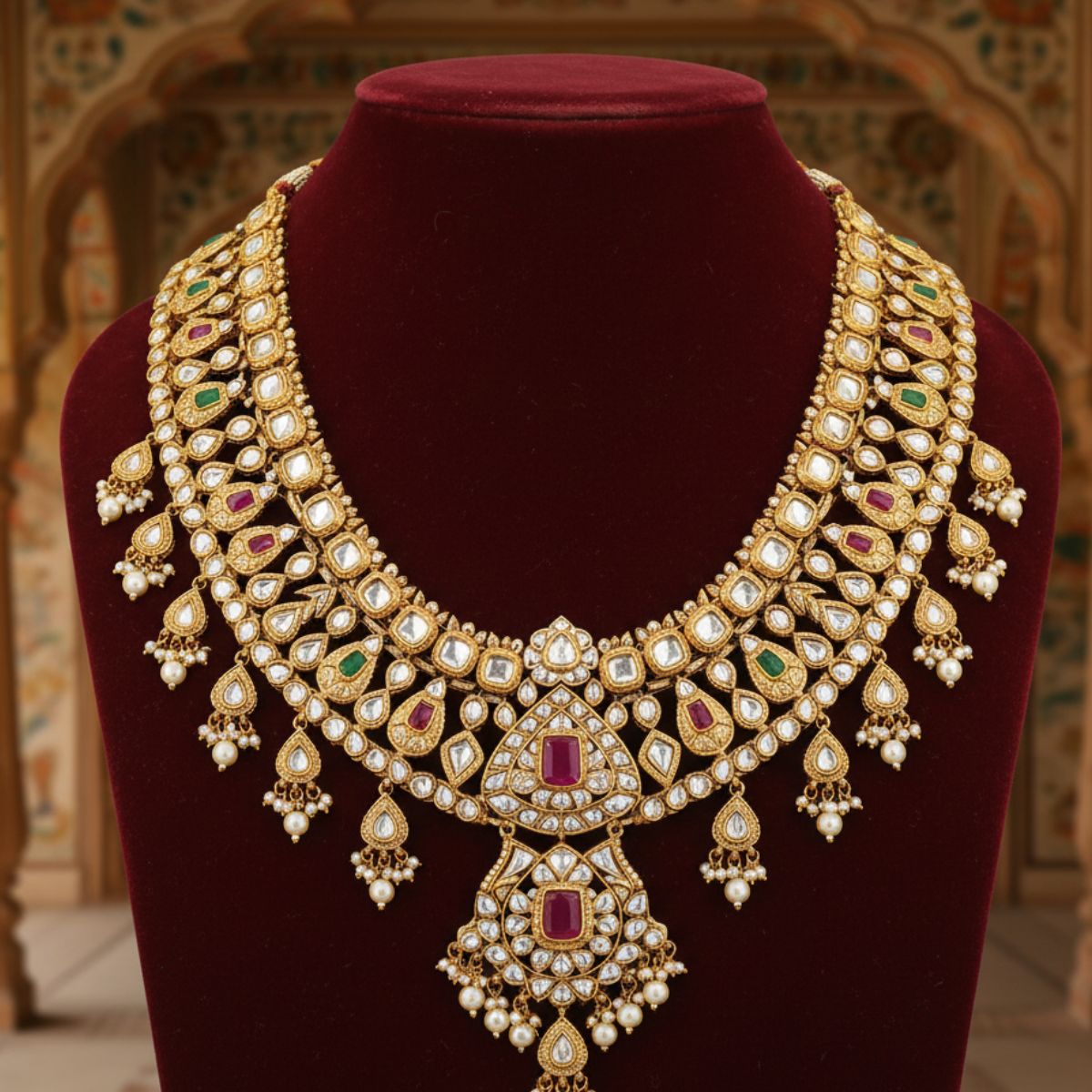
A superfluity of gemstones—pearls, diamonds, rubies, emeralds, and sapphires—add color and glint to these necklaces. A gash pendant, sometimes set with precious stones and elaborate motifs, is a customary unit of Rani Haar necklaces. Twisting and soldering fine metal wires creates fragile and itemized designs, ennobling the necklace's overarching design. Meenakari, also known as enameling, embellishes the necklace with brilliant colors and intricate designs, reflecting the region's creative legacy. People wear the Rani Haar as a fashion statement at festive occasions and important family gatherings, revealing their social standing and cultural background. It epitomizes a person's cultural heritage, snazzing up their sense of air, grace, and identity.
The Punjabi Rani Haar, a renowned item in vogue all over the world, has vanquished cultural barriers. Red carpet events, social media, and fashion shows are run-of-the-mill locales for celebrity and fashion influencer wearers of the Rani Haar, further congealing the accessory's reputation as chic and adaptable. Rather than being an addendum, the Rani Haar serves as a symbol of identity, a tie to one's past, and a symbol of rites de passage. The Rani Haar is a vitally important component of a Punjabi bride's bridal jewelry set, playing to the gallery of the bride's entry into a new chapter of her life and the written in stone tie of marriage. It is a consecrated artifact that defends her cultural heritage as well as her family's wishes and dreams. Above and beyond its sentient value, the Rani Haar is a valuable asset that spells out the stories of archaic generations because of the tradition of passing it down as a period piece.