

Pear Diamond Ring Design: The Avani Pear Elegance Story
etBri Team
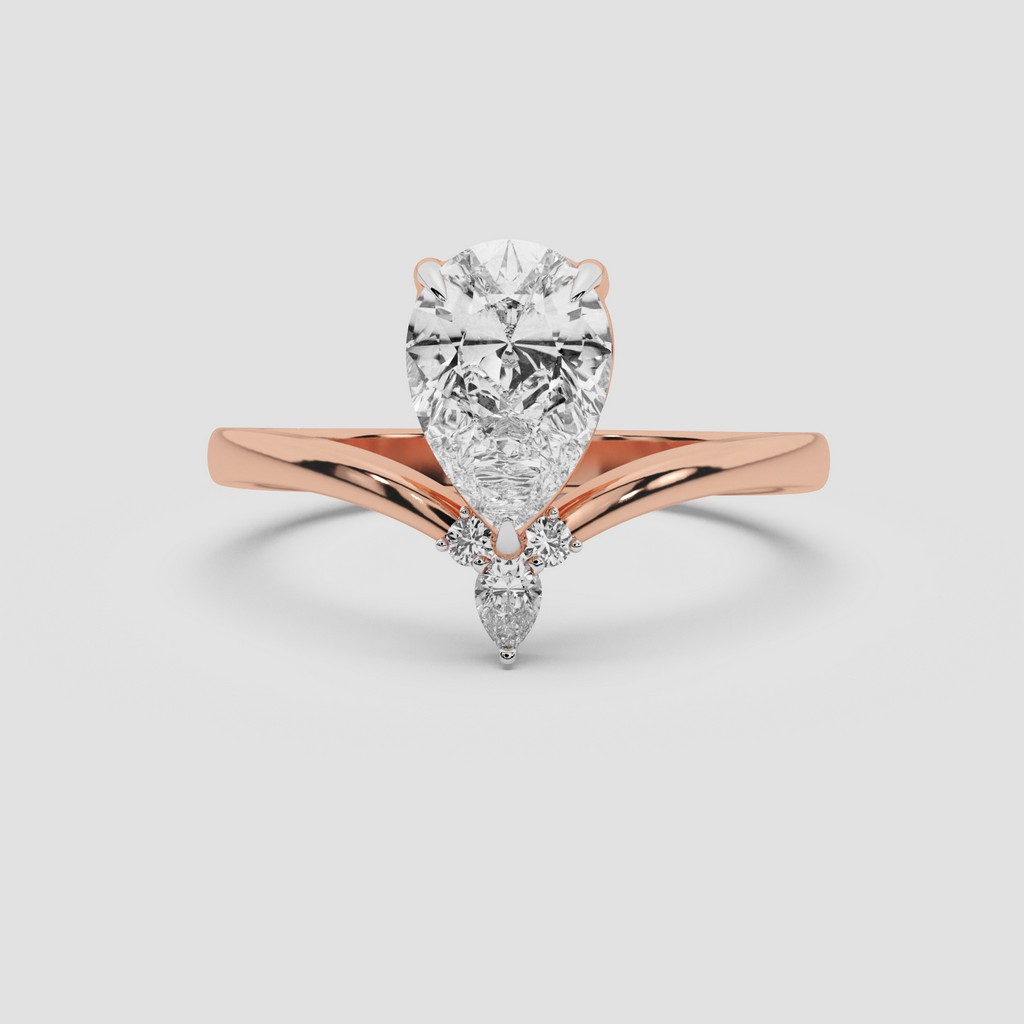
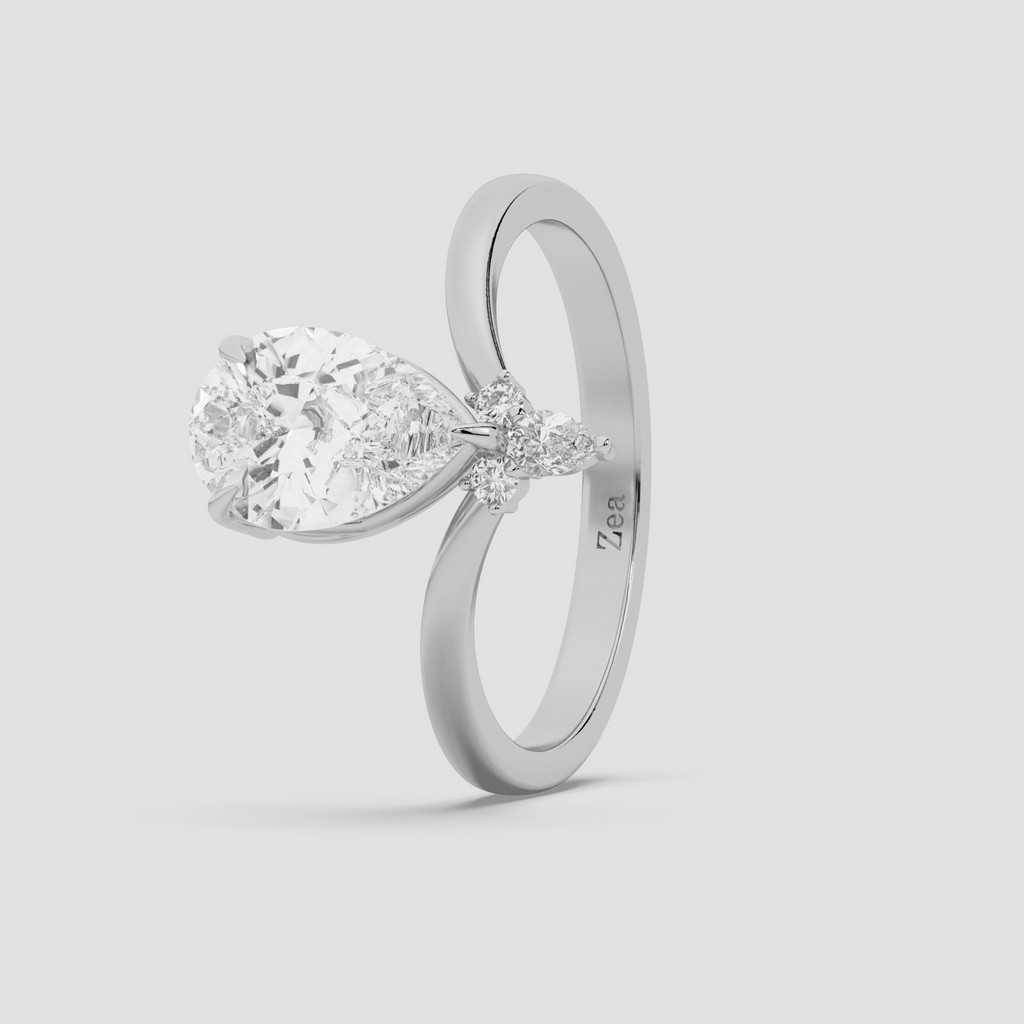
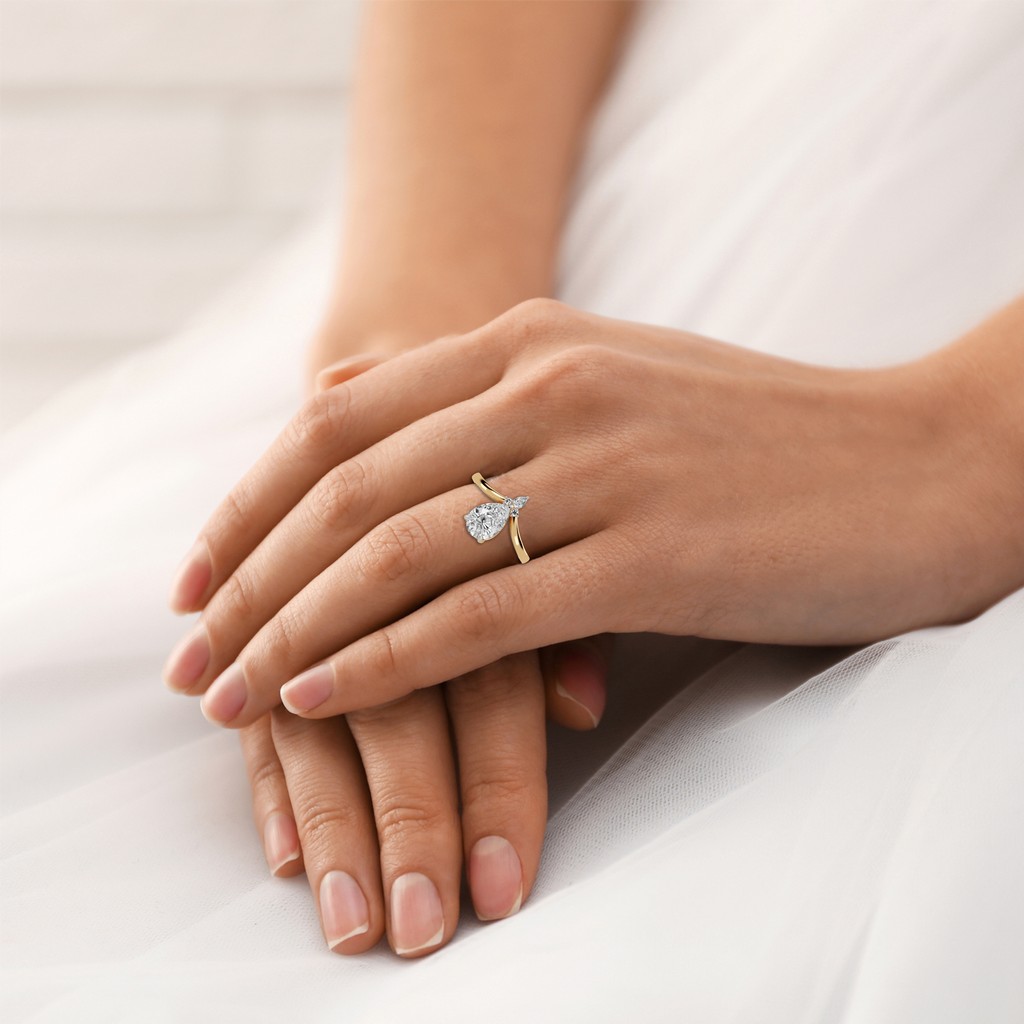
Most rings featuring pear-cut diamonds fail at a fundamental level. They treat the pear shape as merely decorative rather than structural. The result is a pear diamond ring that looks impressive in photographs but loses its visual coherence when worn. The directional nature of the pear cut demands a design philosophy that acknowledges movement, light entry, and the natural geometry of the hand. The Avani Pear Elegance from the Sattva collection was built to solve this specific problem — to create a piece where the pear shape dictates the entire design logic rather than sitting passively within a conventional setting. The pear cut is neither round nor angular. It occupies a rare formal territory — one that suggests movement, direction, and intentional asymmetry. This makes it uniquely challenging and uniquely rewarding when designed correctly. This directional quality is what separates serious pear-shaped designs from decorative applications. The form itself demands that every other element — accent stones, setting height, band width — respond to its inherent movement. The jewelry market treats pear cuts as interchangeable with other fancy shapes. This assumption creates predictable failures that undermine both aesthetics and longevity. A certified diamond ring loses value when its setting contradicts its centre stone. These compromises are invisible in retail display but become apparent within months of daily wear. The Avani Pear Elegance exists because these failures are avoidable through deliberate design. Every element of this pear diamond ring emerged from a single principle: the 1.44-carat pear-cut centre stone must remain visually dominant while the supporting elements enhance rather than compete with its directionality. The silhouette was determined by the pear's length-to-width ratio. A stone of this carat weight requires a band that neither overwhelms nor disappears beneath it. The band tapers subtly as it approaches the stone, creating visual flow that guides the eye toward the centre. Stone placement follows the natural hierarchy the pear shape establishes. The 0.07-carat pear-cut accent stone sits at a calculated distance — close enough to read as part of the composition, far enough to maintain the centre stone's authority. This creates a handcrafted pear diamond ring for women that reads as intentional rather than cluttered. The two round-cut diamonds at 0.034 carats each provide lateral balance. Their round form contrasts with the directional pear shapes, preventing the design from becoming too linear while maintaining visual stability. Setting choice focused on security at the pear's point — historically the most vulnerable position. The prong configuration protects this area without adding visual bulk that would interrupt the stone's clean lines. Metal weight distribution concentrates slightly toward the point end, counterbalancing the stone weight and improving how the ring sits on the hand. This prevents rotation during wear and ensures the pear orientation remains consistent. Proportion decisions rejected both extremes. Too heavy a build would have diminished the pear's inherent delicacy. Too light would have compromised structural integrity and made the piece feel insubstantial against its prominent centre stone. The three stone diamond ring format requires each stone to serve a distinct purpose. Here, the hierarchy is explicit: the 1.44-carat pear commands, the 0.07-carat pear echoes, and the 0.034-carat rounds stabilize. The centre pear cut was selected at this specific carat weight because it provides presence without crossing into ostentation. At 1.44 carats, the stone achieves the visual weight necessary for a statement piece while maintaining the refined proportions the Sattva collection demands. An IGI certified pear cut diamond ring India buyers seek requires this balance — impressive without excess. Pear cuts return light directionally. Unlike rounds, which scatter light uniformly, pears create a focused brilliance that follows the stone's axis. This behaviour informed the entire setting angle — positioned to capture light from natural overhead sources during typical wear. The secondary pear cut at 0.07 carats serves as a visual echo. Its smaller scale reinforces the centre stone's form language without creating competition. This certified pear diamond ring with side stones treats those side stones as compositional elements rather than afterthoughts. Round cuts for the accent positions provide optical rest. After two directional pear shapes, the eye needs circular forms to pause and recalibrate. At 0.034 carats each, these rounds are precisely scaled to provide balance without drawing independent attention. All diamonds carry IGI or SGL certification, verifying cut quality, colour, and clarity specifications. This certification ensures the light behaviour described above performs consistently across every piece produced. Gold purity directly affects how the Avani Pear Elegance looks, feels, and ages. Each option — 10 Kt, 14 Kt, 18 Kt — offers distinct advantages for different priorities and use cases. 10 Kt gold contains 41.7% pure gold alloyed with metals that increase hardness. For this BIS hallmarked ring, 10 Kt delivers maximum scratch resistance and durability. The lighter gold content produces a subtler warm tone. Active wearers who prioritize resilience over richness find this purity ideal. The piece feels lighter on the finger, which some prefer for extended daily wear. 14 Kt gold at 58.3% purity represents the balance point most buyers find optimal. It offers meaningful durability while providing richer colour saturation than 10 Kt. The weight feels substantial without heaviness. A BIS hallmarked rose gold engagement ring in 14 Kt maintains its finish through years of regular wear while displaying the warm depth associated with fine jewelry. 18 Kt gold at 75% purity delivers the richest colour expression. In this pear shaped solitaire design, 18 Kt creates the warmest, most luminous metal appearance. The higher gold content makes it slightly softer, better suited to occasional wear or careful daily use. Heirloom pieces intended for generational transfer often specify 18 Kt for this colour depth and inherent value. BIS hallmarking certifies the exact purity of each option, providing documented assurance that the gold content matches its stated karat value. The Avani Pear Elegance is available in three metal colours, each creating a distinct visual relationship with the diamond cluster. Explore the full Sattva collection to see how each metal colour transforms different designs across the range. A rose gold engagement ring or any fine jewelry purchase requires methodical verification. These checkpoints ensure the piece meets expectations across all quality dimensions. The certified diamond ring carries documentation that enables verification at any point in ownership. Retain all certification materials as permanent records of the piece's specifications. Care requirements for the Avani Pear Elegance reflect its specific construction and stone configuration. Styling this pear diamond ring requires acknowledging its presence without competing against it. Pear cuts introduce directionality that round cuts lack. This handcrafted pear diamond ring for women responds to that directionality through asymmetric accent placement, weighted metal distribution, and setting angles calibrated to the pear's specific light behaviour. Round-cut design principles applied to pears create visual conflict. The setting configuration protects the pear's vulnerable point, making daily wear appropriate in 10 Kt or 14 Kt gold. The secure prong system and balanced weight distribution maintain comfort and stability across extended wear periods without compromising stone security. 10 Kt offers maximum durability for active daily wear. 14 Kt balances durability with richer colour for everyday fine jewelry. 18 Kt provides the deepest colour expression, best suited for occasional wear or heirloom purposes where value and colour richness take priority. Both IGI and SGL certifications confirm each diamond's cut quality, colour grade, clarity characteristics, and carat weight. This documentation provides independent verification that the stones meet stated specifications and maintains value transparency throughout ownership. Consider skin tone and wardrobe palette. Rose gold suits olive and medium complexions with warm wardrobes. White gold provides neutral contrast for cool palettes and fair skin. Yellow gold creates richness against deeper skin tones and complements earth-toned aesthetics. The Avani Pear Elegance demonstrates what becomes possible when design serves form rather than convention. Every specification — from the 1.44-carat centre stone to the precision accent placement — exists for explicit structural and visual reasons. This is jewelry built to perform across decades rather than impress momentarily. Shop now or explore the complete Sattva collection to find the expression that aligns with your design priorities.What the Pear Form Represents in Structural Design
Where Standard Diamond Ring Designs Compromise Quality
The Core Structural Decisions Behind Avani Pear Elegance
Stone Shapes and Carat Logic in a Three Stone Configuration
How Karat Purity Transforms This Design
Metal Colour and How It Affects Visual Character
Verification Points Before Purchasing This Ring
Maintaining Form and Styling for Real Contexts
Frequently Asked Questions
Why does the pear shape require different design logic than round diamonds?
Is this pear diamond ring suitable for daily wear?
Which karat purity should be selected for different use cases?
What do IGI and SGL certifications verify for this piece?
How should buyers choose between rose gold, white gold, and yellow gold?