

HISTORY AND DEVELOPMENT OF LAB-GROWN DIAMOND TECHNOLOGY
etBri Team
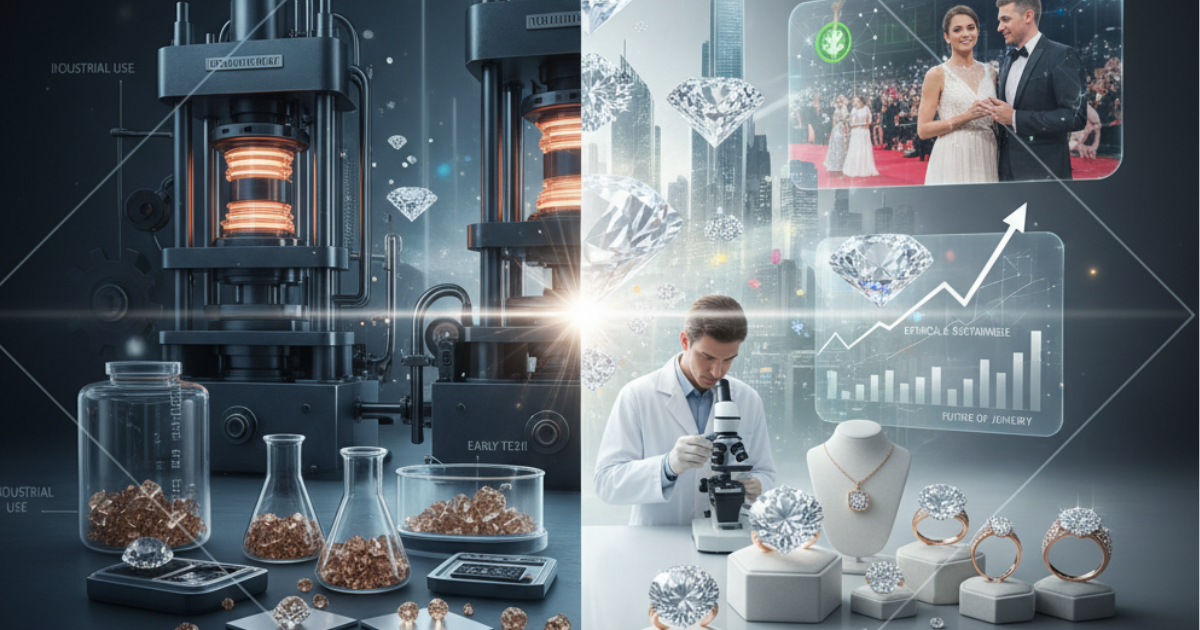
Later, in the 1990s and 2000s, lab-grown diamonds began to acquire more emphasis than the industrial sector. Challenges like small sizes, not optimum color, and clarity were there, but then again, no kingdom was ever built in a day. Historically, synthetic diamonds were mainly made for industrial use using high-pressure, high-temperature (HPHT) processes. Chemical vapor deposition (CVD) was developed in the 1980s and provided a cyclic way to craft synthetic diamonds. Depositing carbon atoms onto a surface in a regulated environment permits the configuration of high-quality diamond crystals based on this procedure. A shift in consumer preferences for lab-grown diamonds in the 2010s started a budge in the market toward more ethical and environmentally friendly options.
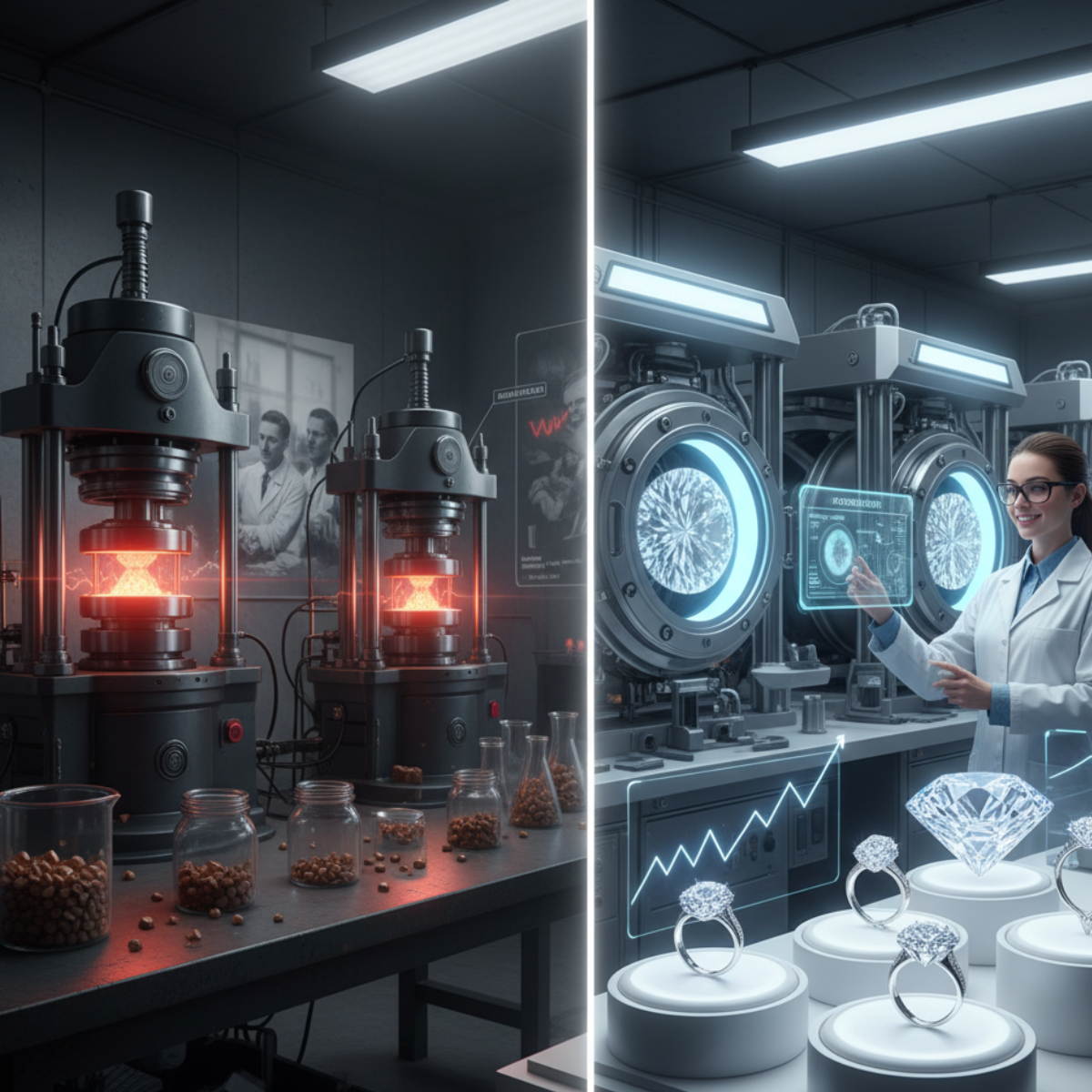
Environmental friendliness and uniformity with natural diamonds are two causes for the extensive assent of lab-grown diamonds today. The principal participants in the diamond industry were heedful of this amendment to customer trends. Before you could say "bling bling," they comprehended that the condition was appalling and began gushing money into lab-grown diamond production. Just at the moment that they emerged, lab-grown diamonds induced a sensation and were seen the world over, from jewelry stores to red carpets. Diamond fusion techniques are foreseen to undergo considerable developments in expandability, competence, and cost-effectiveness as technology advances. Inventions in manufacturing procedures can amplify the output of lab-grown diamonds, which is presently scanty in contrast to mined diamonds.
The market may be certain of a uniform supply of lab-grown diamonds if manufacturers hone their manufacturing approaches and increase capacity. Soon, these man-made sparklers will be everyone's choice. Additionally, it is impossible to say that naturally occurring diamonds will be obsolete in favor of lab-grown diamonds in the future since they are more ethical, less expensive, and just as stunning. Whether you're wearing a lab-grown diamond or a natural diamond that has been passed down through the years, one thing is certain: diamonds are perennial.