

CROWNING ELEGANCE: THE STORY OF THE KASHMIRI TIKKA
etBri Team
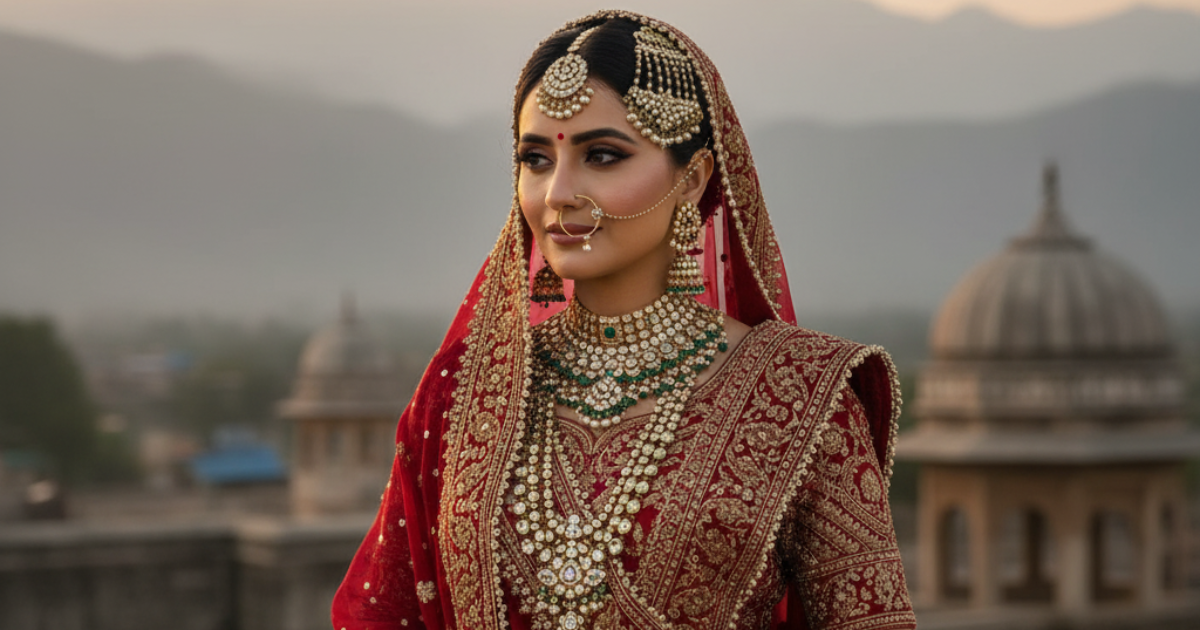
Diverse regions of India have their own unique takes on the venerable custom of wearing a tikka over one's forehead. In Kashmir, the Tikka has developed into its own unique art form, casting back the native artistic delicacy. Classic Kashmiri tikkas are known for the flesh-out patterns and high-quality workmanship characteristic of the Mughal period. Symbolizing a Kashmiri bride's beauty and grace, the Tikka has remained an integral part of her clothing over the generations.
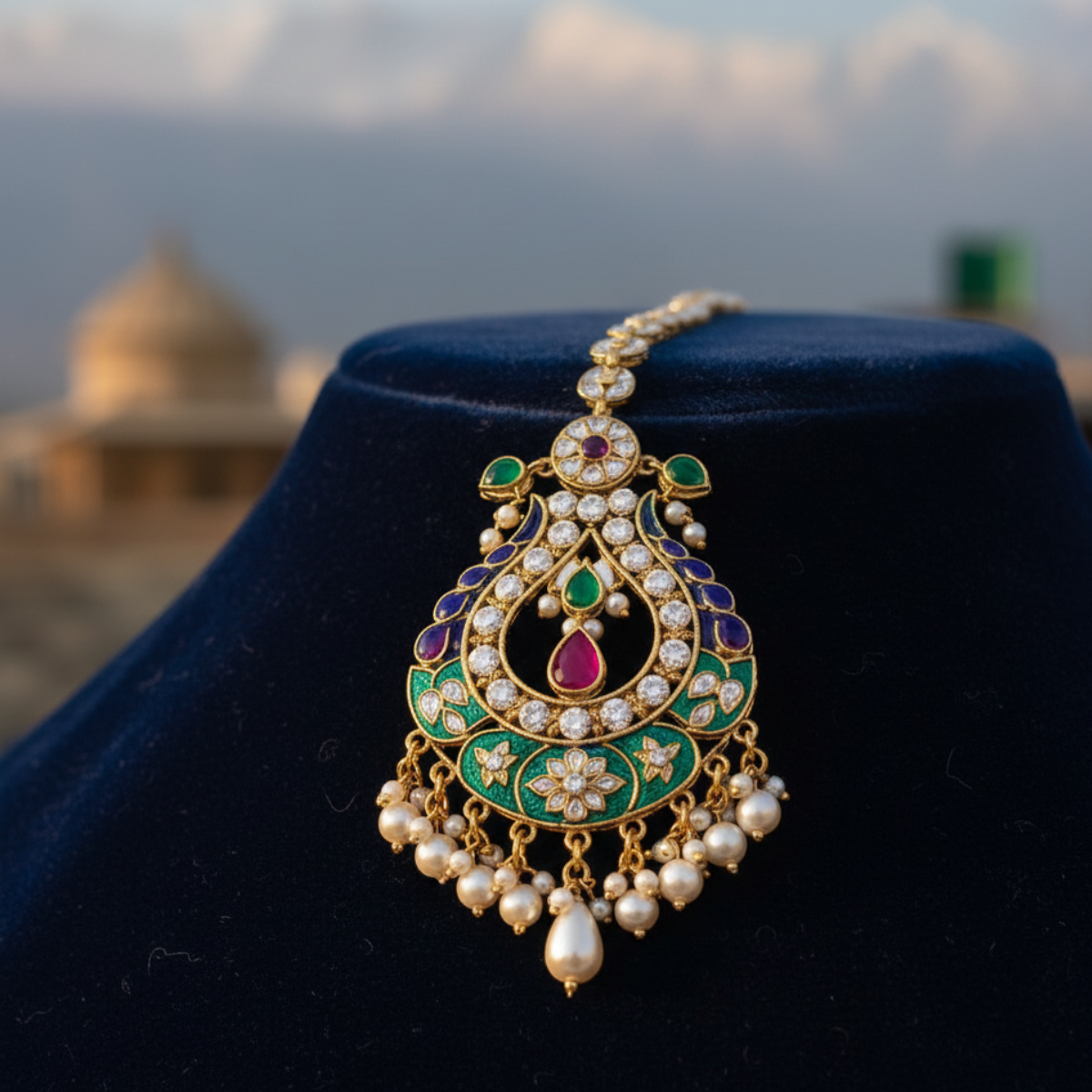
Placing the tikka on the bride's forehead, slightly above the bindi, is a customary way to make her look more beautiful and elegant. Additionally, people wear the Tikka as an insignia of their pedigree and individuality. Wearing the Tikka is an important part of Kashmiri women's cultural heritage and a way to preserve their customs. It serves as a sensory trigger for their cultural heritage, as well as a connection to their family tree. Usually crafted from gold and spiffed up with pearls, enamel, precious stones, and semiprecious stones, the Tikka is a traditional Indian headdress. Hingeing on the event and the wearer's taste, the Tikka's design can range from brush-aside and sophisticated to bountiful and heavy-going. A chain passes through the hair section and attaches to the central pendant.
Conventionally crafted from gold, you can leave this necklace plain or spruce it up with tiny stones and beads. Some chains finish at the crown, while others go all the way to the back of the head. Tikka designs draw inspiration from traditional Kashmiri art and natural themes. Patterns with geometric shapes, flowers, leaves, and paisleys are common. The artists' talent and imagination often depict these motifs in excellent detail. The size, shape, and embellishment of the Tikka varied across Kashmir. Pieces with elaborate enamel work and gemstone settings tend to be more popular in some locations, while simpler designs with an emphasis on gold filigree are more popular in others. The choice of materials and themes may reflect local traditions and creative styles. The Tikka is an ornament with both ancient and modern sways that serves as a connecting rod between times. Because of its persistent use in contemporary fashion, it is now a doted-on item for brides and other ladies who want to remember Kashmir's beauty wherever they go. An encomium to the timeless appeal of ubiquitously pertinent customs, it has changed all along without losing its core values.