

Blooming Radiance Pendant Design Story: 2.04 Floral Crown
etBri Team
Most floral diamond pendants fail at the same point. They mistake decoration for design. Petals are added for visual appeal without considering how they affect light behaviour, how they change weight distribution, or how they determine whether the piece sits correctly against different necklines. The round diamond pendant in the Florette collection exists because botanical jewelry deserved a structural rethinking. The 2.04 carat diamond at its centre is not merely placed within a flower motif. It is engineered into a crown setting that addresses how light enters, how weight balances, and how the form reads from conversational distance.
What the Floral Crown Form Actually Represents
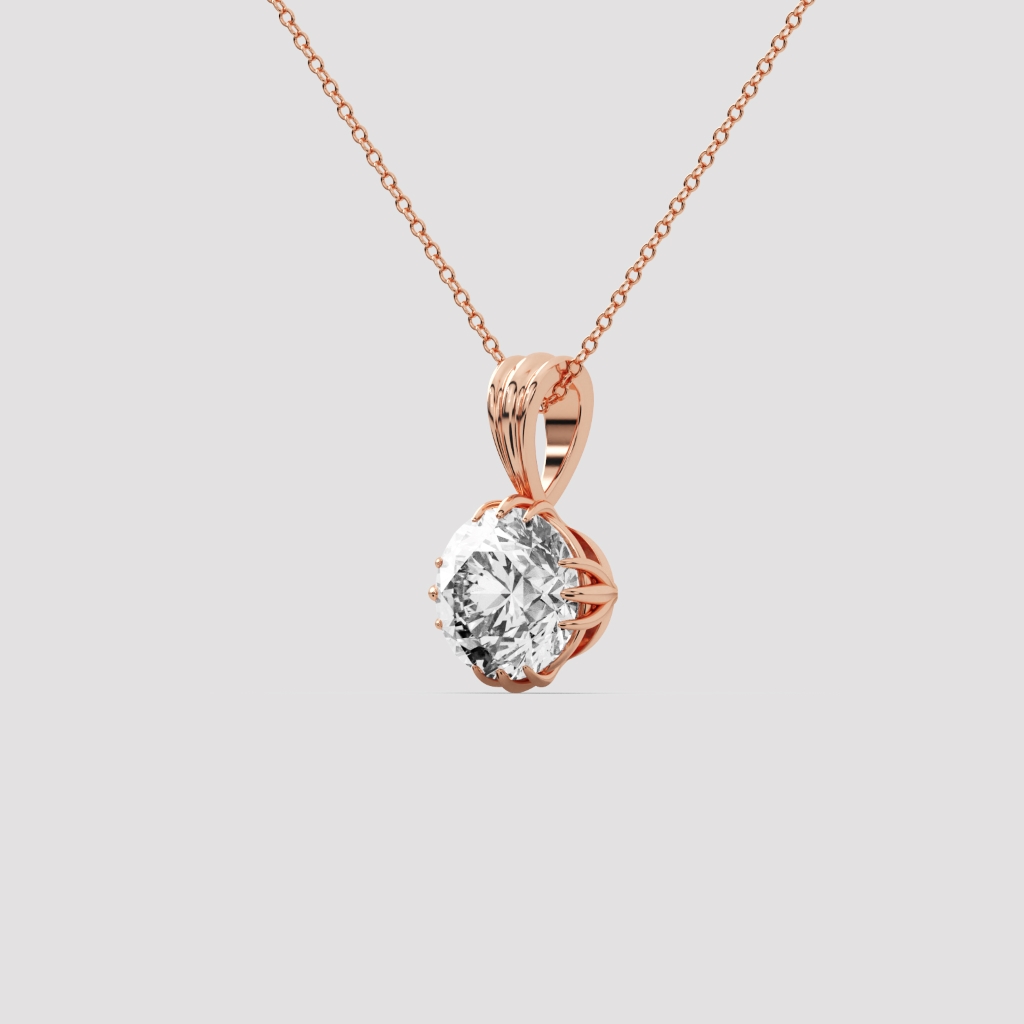 The crown setting in botanical jewelry carries specific visual and structural meaning. It is not simply decorative framing.
- A crown elevates the centre stone above the metal plane, allowing light to enter from beneath the diamond as well as from above, which increases brilliance without requiring a larger stone.
- The petal arrangement around a crown creates visual rhythm. Each petal acts as a directional element that guides the eye inward toward the diamond rather than competing with it.
- Historically, crown settings in floral designs indicated permanence. The form referenced garlands and wreaths used to mark significant life events across cultures.
- In contemporary jewelry, the crown silhouette allows a single stone to read as substantial without requiring excessive carat weight or metal bulk.
The Florette collection draws from this formal history. The crown is not ornament. It is the mechanism that makes a 2.04 carat stone behave visually like something larger while remaining light enough for daily wear.
Where Most Diamond Pendant Designs Undermine Themselves
Before explaining what the Blooming Radiance Pendant does correctly, it is worth understanding what most flower design solitaire pieces do poorly.
- Shallow settings that press the diamond too close to the metal surface, blocking light entry and reducing brilliance to a fraction of what the stone could deliver.
- Petal elements that extend too far from the centre, creating a silhouette that overwhelms the diamond and shifts visual attention to the metalwork.
- Uniform petal thickness that makes the piece feel heavy at the edges, causing it to tilt forward when worn and never sitting flat against the chest.
- Prong placement that prioritises symmetry over security, leaving the stone vulnerable to impact from certain angles.
- Metal weight distributed evenly rather than concentrated where structural support is needed, resulting in pieces that feel dense without being secure.
These are not aesthetic failures. They are engineering shortcuts. The petal setting diamond pendant in the Florette collection was designed specifically to avoid each of these.
The Core Structural Decisions Behind This Crown Setting Pendant
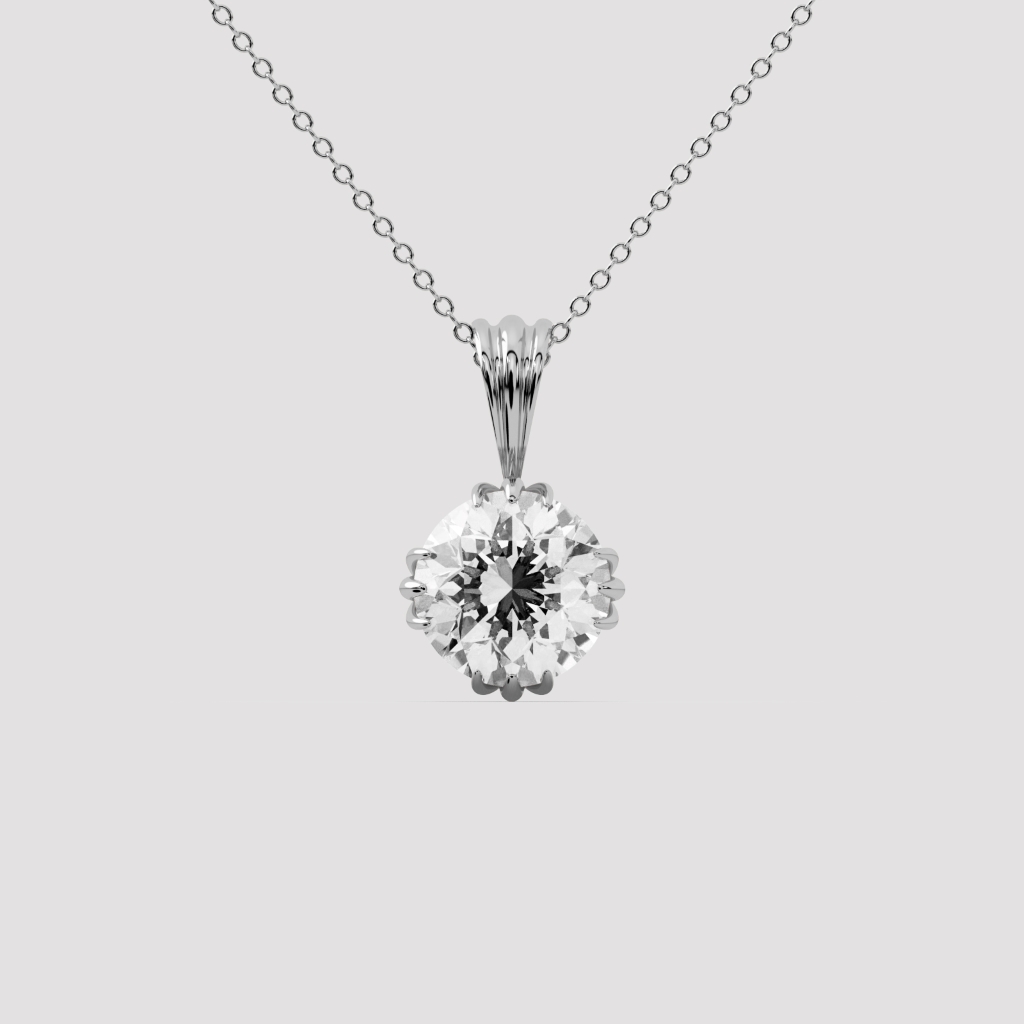 Every element of this nature-inspired diamond pendant required deliberate choice. None of the proportions are arbitrary.
The silhouette begins with the crown height. Too low, and light cannot enter the pavilion effectively. Too high, and the piece catches on fabric and feels precarious during movement. The height was calibrated to maximise light entry while keeping the total profile low enough for comfortable layering.
Stone placement positions the 2.04 carat round diamond at the exact centre of the petal arrangement, but slightly elevated. This elevation creates a shadow line beneath the crown that gives the design depth without requiring additional metal elements. The shadow becomes part of the visual architecture.
The setting choice uses a hybrid approach. Prongs emerge from the petal tips rather than from a separate collet. This integrates security into the decorative structure. The prongs are not additions to the design. They are the design.
Metal weight concentrates at the bail and at the base of the crown where structural stress is highest. The petals themselves taper toward their tips, reducing edge weight and preventing the forward tilt that plagues poorly balanced floral pendants.
Proportion decisions involved testing multiple petal widths against the 2.04 carat stone diameter. The final ratio ensures that the petals frame without crowding. From arm's length, the eye registers the diamond first and the setting second. This hierarchy is essential for a classic floral diamond pendant.
Why a 2.04 Carat Round Cut Serves This Form
The round brilliant cut is the most efficient light return shape in diamond cutting. For a certified round diamond pendant built around a single stone, this efficiency matters.
Round cuts disperse light in all directions equally. There is no directionality to manage. This means the pendant reads consistently whether viewed straight on or at an angle, whether in daylight or under warm interior lighting.
The 2.04 carat weight was selected for specific visual reasons. Below two carats, the stone begins to recede into the floral crown rather than anchoring it. Above 2.5 carats, the stone dominates so completely that the petal structure becomes invisible at conversational distance. The 2.04 carat point creates balance. The luxury botanical diamond pendant rose gold certified achieves equal visual weight between stone and setting.
A rose gold round diamond pendant floral crown setting demands a stone with excellent cut grade. The 2.04 carat round diamond florette pendant romantic design uses only IGI or SGL certified diamonds. These certifications verify cut quality, clarity, colour, and carat weight through independent laboratory assessment. Without certification, claims about light performance remain unverifiable.
How 10 Kt, 14 Kt, and 18 Kt Change This Piece
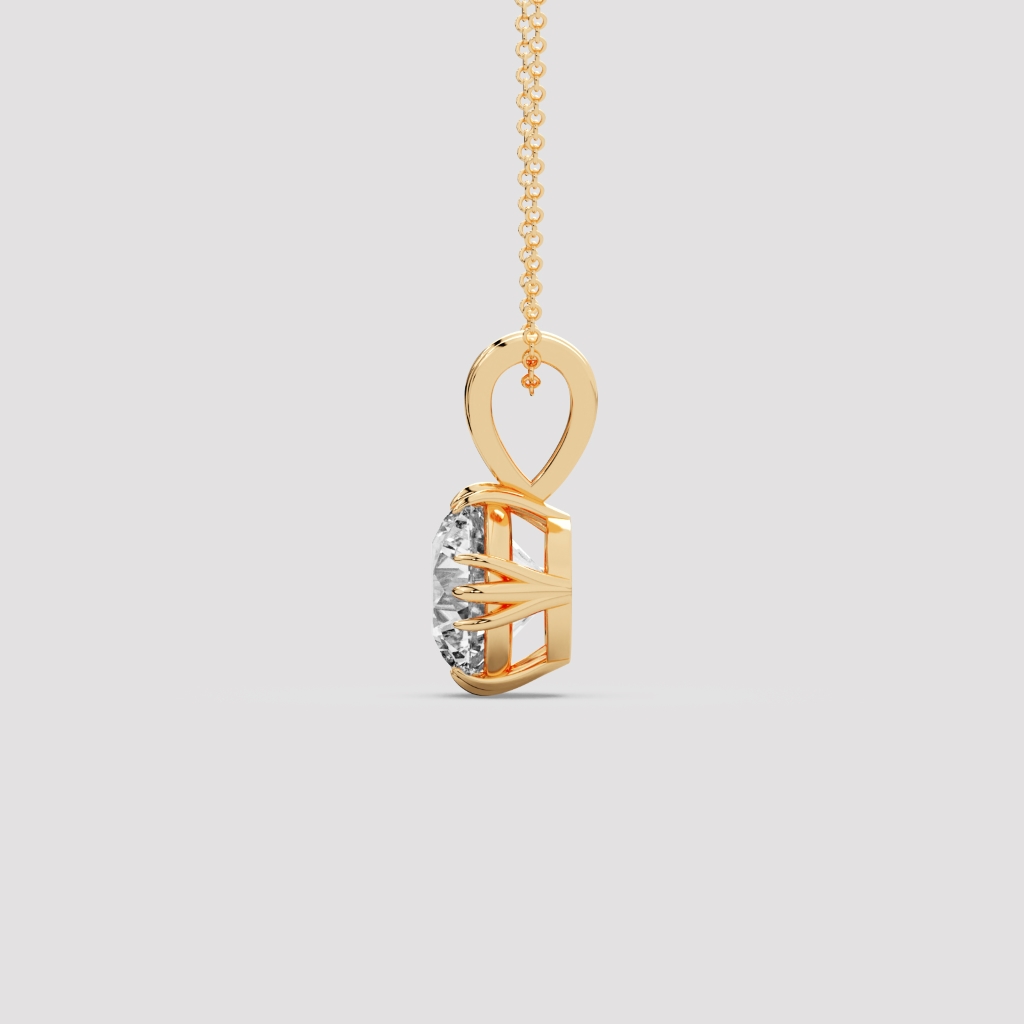 Gold purity affects more than just price. For the BIS hallmarked floral pendant, each karat level creates a different wearing experience.
10 Kt gold contains 41.7% pure gold. The higher alloy content makes it the hardest option. For someone who wears jewelry continuously, including during physical activity, 10 Kt offers maximum scratch resistance. The colour is lighter, which can create interesting contrast with the diamond. The premium rose gold floral pendant BIS hallmarked classic florette pendant round diamond timeless elegance performs differently at this purity. Weight is lower, making extended wear more comfortable.
14 Kt gold contains 58.3% pure gold. This is the balance point. Colour saturation deepens noticeably compared to 10 Kt. Durability remains high enough for everyday wear but with a richer visual presence. For buyers who want a nature-inspired petal setting diamond pendant rose gold certified round diamond pendant flower crown luxury that reads as substantial without requiring the investment of 18 Kt, this is the practical choice.
18 Kt gold contains 75% pure gold. Colour reaches its richest expression. The metal is softer, which means it will show wear over decades, but this patina is often desirable in heirloom pieces. For a romantic flower crown pendant round diamond solitaire timeless floral setting pendant rose gold vintage design intended to mark a significant occasion, 18 Kt communicates that intention through its material quality.
BIS hallmarking certifies each purity level. The hallmark verifies gold content, manufacturer identity, and assaying centre. This is not optional validation. It is the only way to confirm that the stated purity is accurate.
Three Metal Colours and How This Design Behaves in Each
The Blooming Radiance Pendant is available in rose gold, white gold, and yellow gold. Each creates a distinct relationship with the diamond.
- Rose gold introduces warmth that complements the fire within the round brilliant cut. The copper content creates a blush tone that suits medium to warm skin tones. In soft lighting, the elegant round diamond pendant nature-inspired crown setting premium certified florette pendant rose gold romantic achieves a vintage quality without requiring antiquing or distressing. The metal does not compete with the diamond. It frames it with warmth.
- White gold creates maximum contrast between metal and stone. The cool tone makes the diamond appear to float within the crown setting. This works particularly well for those with cool undertones in their skin. Under bright lighting, white gold recedes visually, placing full attention on the 2.04 carat stone. The vintage style diamond pendant reads as more contemporary in white gold.
- Yellow gold offers the classic expression of fine jewelry. The warm tone relates directly to the diamond's body colour, creating visual harmony rather than contrast. On warmer skin tones, yellow gold appears to glow. The vintage-inspired floral diamond pendant crown design classic round diamond pendant botanical rose gold sophisticated florette pendant petal setting diamond finds its most traditional expression in yellow gold.
Explore the full Florette collection to see how each metal colour performs across different silhouettes and stone arrangements.
What to Verify Before Purchasing This Botanical Jewelry Design
Buying a certified round diamond pendant requires attention to specific details.
- Confirm IGI or SGL certification for the diamond. Request the certificate number and verify it independently through the issuing laboratory's website.
- Check BIS hallmark. The hallmark should include the BIS logo, purity designation, assaying centre mark, and jeweller identification mark.
- Assess setting security. The contemporary floral diamond pendant romantic rose gold should show no visible gaps between prong tips and the diamond surface.
- Consider purity based on wearing context. Daily continuous wear favours 10 Kt or 14 Kt. Special occasion and heirloom intent favours 18 Kt.
- Choose metal colour based on skin tone and existing jewelry wardrobe. Mixing metals is acceptable, but coherence within a single outfit typically reads better.
Caring for and Styling the Petal Setting Diamond Pendant
The crown setting requires specific care considerations.
- Clean with lukewarm water and mild soap only. Avoid ultrasonic cleaners, which can loosen prongs over time in intricate settings.
- Store separately from other jewelry. The diamond can scratch softer metals and stones. Use individual pouches or compartmented boxes.
- Inspect prongs every six months. Any visible lifting or thinning should be addressed before the diamond becomes insecure.
Styling this piece works across multiple contexts.
- Against a high neckline, the pendant sits just below the collarbone and reads as a deliberate focal point. Minimal earrings allow the pendant to command attention.
- With an open neckline, the pendant falls into the decolletage and benefits from simpler styling elsewhere. Let the 2.04 carat stone do the work.
- For layering, pair with fine chains of different lengths. The crown setting provides enough visual weight to anchor a layered arrangement without being overwhelmed.
Frequently Asked Questions
What makes the petal setting structurally different from standard floral pendant designs?
The petal setting integrates security prongs directly into the decorative elements. Rather than adding prongs as separate components, the petals themselves taper into prong tips. This reduces visual clutter, concentrates metal weight at stress points, and creates a cleaner silhouette. The design serves both aesthetic and structural purposes simultaneously.
Is this round diamond pendant suitable for daily continuous wear?
Yes. The crown setting elevates the diamond above fabric contact. The pendant profile is calibrated for layering and movement. In 10 Kt or 14 Kt gold, the alloy hardness resists daily abrasion effectively. For continuous wear, avoid ultrasonic cleaning and inspect prongs periodically. The pendant is built for life, not for occasional display.
How should one choose between 10 Kt, 14 Kt, and 18 Kt for this piece?
10 Kt suits active lifestyles and budget-conscious buyers who prioritise durability. 14 Kt balances richness and resilience for versatile everyday jewelry. 18 Kt offers the deepest colour and softest feel, ideal for heirloom pieces and significant occasions. Each purity level is BIS hallmarked for verification.
What do IGI and SGL certifications verify about the diamond?
IGI and SGL are independent gemmological laboratories. Their certifications verify the diamond's carat weight, cut grade, clarity grade, and colour grade through standardised assessment procedures. This independent verification prevents misrepresentation and provides documented proof of the stone's specifications for insurance and resale purposes.
How does one decide between rose gold, white gold, and yellow gold?
Consider skin undertone first. Warm undertones suit rose and yellow gold. Cool undertones suit white gold. Consider existing jewelry second. Matching metals creates coherence. Consider lighting third. Rose gold glows in warm light. White gold sharpens in cool light. Yellow gold performs consistently across conditions.
The Blooming Radiance Pendant represents what happens when botanical motifs meet structural discipline. Every proportion serves a purpose. Every material choice creates specific outcomes. The 2.04 carat round diamond anchors a crown setting that will perform correctly across decades of wear. Shop now to see how this certified diamond pendant translates design intention into lasting form, or explore the Florette collection to discover related pieces built from the same principles.