

Baguette Diamond Ring: The Cascade Design Philosophy
etBri Team
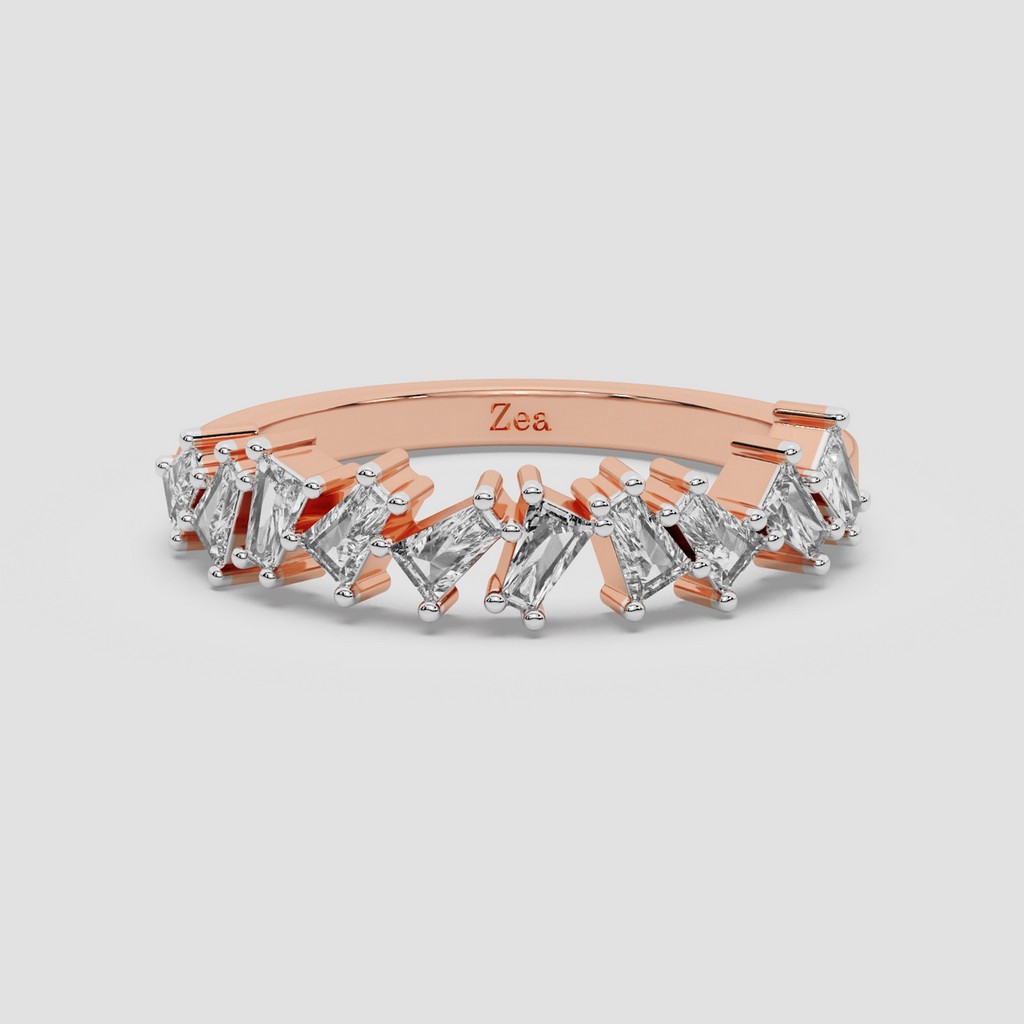
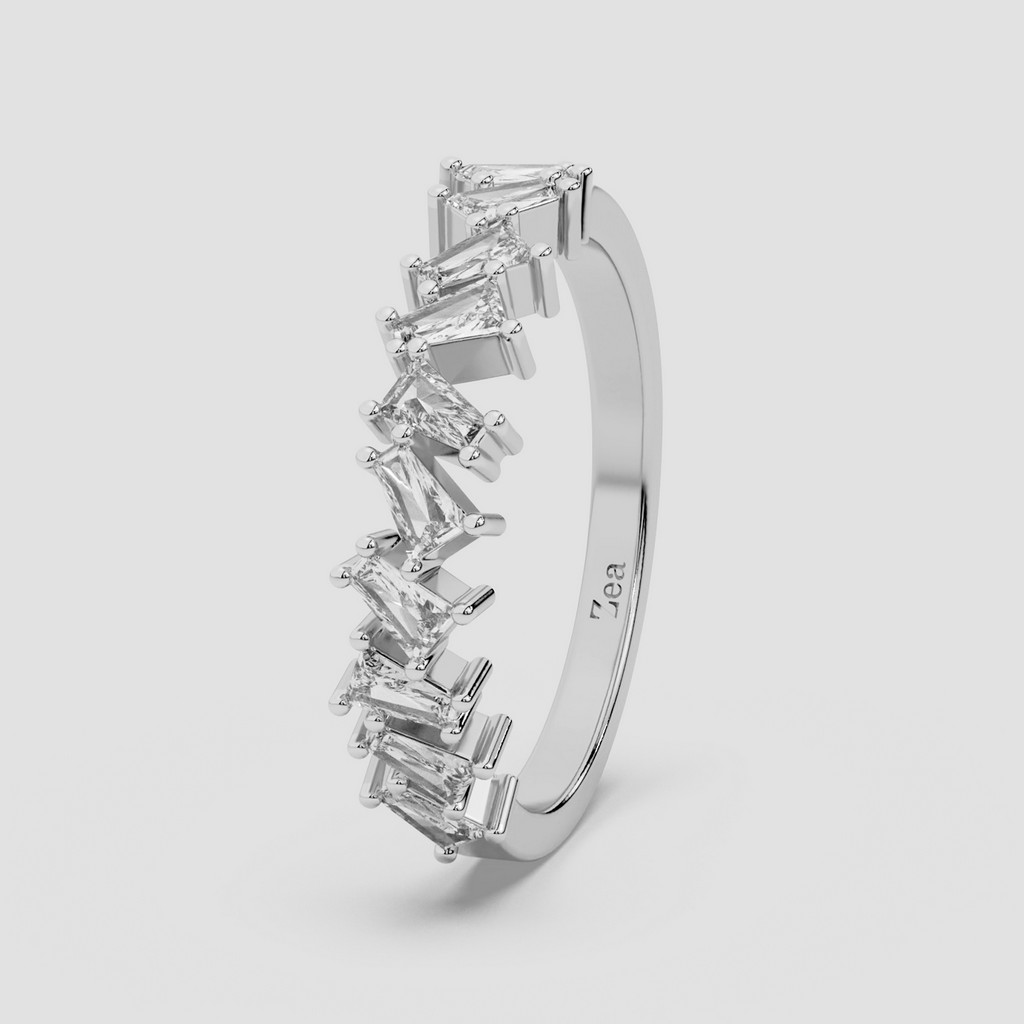
Most diamond rings arrange stones in expected formations. Rows. Halos. Clusters that follow convention. The Baguette Cascade Ring began with a different question: what if stone placement felt inevitable rather than imposed. This baguette diamond ring from the Zyra collection treats each of its ten baguette-cut diamonds as an independent element within a unified visual system. The result is a contemporary ring design that moves beyond symmetry into something more considered — scattered brilliance with structural intent. The cascade motif draws from natural phenomena where elements fall into place through their own logic. Water finding paths down stone. Leaves settling after wind. This geometric diamond ring applies that principle to precious materials. This is design that rewards attention. From a distance, the ring reads as unified brilliance. Up close, each stone reveals its individual character and placement logic. The jewellery industry has established shortcuts that prioritise manufacturing ease over visual integrity. Most baguette cut ring designs suffer from predictable problems. These issues compound. A ring with poor stone spacing and inadequate setting design becomes forgettable regardless of its carat weight or metal purity. The Baguette Cascade Ring exists because these problems needed solving. Creating a modern diamond ring that appears scattered while maintaining structural integrity required specific decisions at every stage. Random placement would fail. Rigid symmetry would contradict the concept. The solution lies in controlled asymmetry. The silhouette emerged from studying how the eye processes multiple focal points. Ten baguette diamonds distributed across the ring surface needed to create visual pathways — the eye should move naturally from stone to stone without feeling directed. Each diamond's position was determined by its relationship to adjacent stones and to the negative space surrounding it. Stone placement follows what we call gradient density. Baguettes cluster more closely in certain areas and disperse in others, creating rhythm through variation rather than repetition. This approach means no two viewing angles present the same visual experience. The setting choice — channel and bar combinations calibrated to each stone's position — serves dual purposes. Security comes from metal contact points positioned to resist the specific stress vectors each stone faces. Visibility comes from minimising metal presence where it would interrupt light flow. A certified baguette cut diamond ring online must verify both setting security and visual transparency; IGI and SGL certification confirm our diamonds meet the standards this design demands. Metal weight concentrates in the band's structural core while the upper surface remains refined. This creates a ring that feels substantial without heaviness — the weight registers as quality rather than burden. Proportion decisions were tested across finger sizes; the design maintains its visual impact from size 4 to size 12 without requiring structural compromise. The baguette cut diamond behaves unlike other shapes. Its step-cut faceting creates linear light return — flashes rather than sparkle, mirrors rather than prisms. This directional brilliance suits the cascade concept perfectly. Each stone catches light from its unique angle, creating visual complexity impossible with round or princess cuts. The total carat weight of 0.56 represents deliberate restraint. Higher carat presence would overwhelm the scattered effect; the stones would merge visually rather than read as individuals. Lower weight would make the negative space dominant and the design feel sparse. Each of the ten baguettes carries custom proportions optimised for this setting. Length-to-width ratios ensure visual consistency while maintaining each stone's character. IGI and SGL certification verifies colour, clarity, and cut parameters that factory-set stones rarely achieve. This contemporary rose gold diamond ring collection piece demonstrates how carat weight serves concept rather than competing with it. The diamonds are supporting actors in a larger composition, not soloists demanding attention. Three purity levels create three distinct versions of this design. BIS hallmarking certifies each, but the experience differs meaningfully. 10 Kt gold offers the highest durability. Its alloy composition creates hardness that resists the micro-scratches of daily contact. The colour runs lighter — a subtler warmth in rose, a brighter white, a softer yellow. For those who wear jewellery constantly and actively, this purity maintains its finish longest. The elegant scattered diamond ring for daily wear finds its most practical expression here. 14 Kt gold balances colour richness with wearability. The higher gold content deepens each metal tone while retaining enough alloy strength for regular use. This purity has become the fine jewellery standard for good reason — it performs across occasions without requiring careful handling. Most buyers find this baguette diamond ring in 14 Kt meets their needs for both aesthetic impact and practical durability. 18 Kt gold maximises colour saturation. Rose reaches its warmest blush. White achieves its purest cool. Yellow develops that distinctive depth associated with heirloom pieces. The softer metal requires more mindful wear but rewards that care with unmatched visual richness. Investment purchases and occasion-specific pieces often favour this purity for its colour authority. The baguette diamonds interact differently with each metal colour. Understanding this interaction guides selection. Explore the full Zyra collection to see how these metal choices extend across coordinating pieces. A baguette diamond rose gold ring for women — or any metal variant — requires specific verification before commitment. This design requires care appropriate to its construction and intended use. Styling this ring benefits from its versatility. Standard designs arrange baguettes in rows or matching pairs. The cascade places each stone according to its relationship with surrounding space and adjacent stones. This creates visual movement and rewards extended viewing in ways symmetrical designs cannot achieve. Yes. The channel and bar settings protect each baguette's vulnerable edges. Metal selection matters — 10 Kt offers maximum scratch resistance, 14 Kt balances durability with colour, 18 Kt requires slightly more careful handling. All purities withstand normal daily activities. 10 Kt suits active lifestyles and constant wear. 14 Kt serves most buyers seeking both beauty and practicality. 18 Kt rewards those prioritising colour richness for special occasions or collection pieces. Each represents quality; the choice reflects intended use. These independent laboratories assess each diamond's colour grade, clarity grade, cut quality, and carat weight. Certification confirms the stones meet stated specifications and provides documentation supporting the ring's value. BIS hallmarking separately verifies gold purity. Consider skin undertone — warm complexions often favour rose and yellow, cooler tones complement white gold. Consider wardrobe palette. Consider existing jewellery for coordination. All three metals showcase the baguettes effectively; the choice is aesthetic rather than qualitative. The Baguette Cascade Ring demonstrates what becomes possible when design thinking precedes decoration. Every element exists for reason. Every decision solves a specific problem. The result holds its quality across years and occasions — a contemporary ring design built for permanence. Shop Now or explore the full Zyra collection to discover coordinating pieces.What Cascade Geometry Represents in Form
Where Standard Ring Design Falls Short
The Architecture of Scattered Precision
Why Ten Baguettes at This Carat Weight
How Gold Purity Shapes the Wearing Experience

Three Metal Tones and Their Diamond Dialogue
Verification Points Before Purchase
Maintenance Protocol and Styling Context
Frequently Asked Questions
What makes the cascade arrangement different from standard baguette designs?
Can this baguette diamond ring handle daily wear without damage?
Which karat purity should different buyers choose?
What do IGI and SGL certifications actually verify?
How should buyers decide between rose gold, white gold, and yellow gold?